The next morning Agatha went over to Washington Square to let Philip know that the trip southward had been postponed for a week or so. And Philip knew that the trip southward would never take place at all, but that drives with Charley in Central Park would prove much better for the invalid.
"Oh, yes, it's all right then. I expected it," he said.
"Yes," said Agatha, "it's all right. I managed it myself, Cousin Philip. I brought them together."
"Did you, Agatha?" he said with a queer smile. "That was clever."
"Yes, and they have not thanked me for it. Phillida wishes to see you. She told me to tell you."
"I don't doubt she can wait," said Philip smiling, "seeing me is not important to her just now. Give her my love and congratulations, and tell her I'll come in the day before she starts to Hampton. There'll be time enough before she gets off, Agatha." This last was said with a laugh that seemed to Agatha almost happy.
Phillida's recovery was very rapid; it was all the effect [Pg 423] of driving in the Park. Perhaps also the near anticipation of a trip to Europe had something to do with it, for Millard had engaged passage on the Arcadia the first week in June. To Mrs. Callender this seemed too early; it gave the mother and her dressmaker no end of worry about the wardrobe.
Two weeks after her reconciliation with Charley, Phillida demonstrated her recovery by walking alone to her aunt's in Washington Square. She asked at the door to see Mr. Philip, and when she learned that he was in his book-room she sent to ask if she mightn't come up.
"Busy with my catalogue," said Philip as Phillida came in. He had been busy making a catalogue of his treasures for two years, but he could not get one to suit him. "I hate to print this till I get a complete 'De Bry,' and that'll be many a year to come, I'm afraid. I couldn't afford the cost of a complete set this year nor next, and it's hardly likely that there'll be one for sale in ten years to come. But it will give me something to look forward to."
All this he said hurriedly as though to prevent her saying something else. While speaking he set a chair for Phillida, but she did not sit down.
"Cousin Philip," she said, "you might just as well hear what I've got to say first as last."
"Hear? Oh, I'm all attention," he said, "but sit down," and he set the example, Phillida following it with hesitation.
"If you had pulled me out of the water," she began, [Pg 424] "and saved my life, you'd expect me to say 'thank you,' at least. Charley has told me all about how you acted. We think you're just the noblest man we have ever known."
"Ah, now, Phillida," protested Philip, quite bewildered for want of a lighted cigar to relieve his embarrassment, "you make me feel like a fool. I'm no hero; it isn't in me to play any grand parts. I shall be known, after I'm dead, by the auction catalogue of my collection of rare books, and by nothing else. 'The Gouverneur Sale' will long be remembered by collectors. That sort of distinction fits me. But you and Charley are making me ridiculous with all this talk."
"Phil, you dear fellow," said Phillida, passionately, rising and putting her hands on his shoulder, "you saved me from life-long misery, and may be from death, at a fearful sacrifice of your own feelings. I'll remember it the longest day I live," and she leaned over and kissed him, and then turned abruptly away to go down-stairs.
Philip trembled from head to foot as he rose and followed Phillida to the top of the stairs, trying in vain to speak. At last he said huskily: "Phillida, I want to explain. I am no hero. I had made a fool of myself as I knew I should if I ever—ever spoke to you as I did that day. Now, of all things I don't like to be ridiculous. I thought that evening if I could be the means of bringing you two together it would take the curse off, so to speak. I mean that it would make me cut a less ridiculous figure than I did and restore my self-respect. I wanted to be [Pg 425] able to think of you and Charley happy together without calling myself bad names, you know."
"Yes, yes," replied Phillida. "I know. You never did a generous thing in your life without explaining it away. But I know you too well to be imposed on. I shall always say to myself, 'There's one noble and disinterested man under the sky, and that's my brave Cousin Philip.' Good-by." And standing on the first step down she reached him her hand over the baluster rail, looked at him with a happy, grateful face which he never forgot, and pressed his hand, saying again, "Good-by, Philip," and then turned and went down-stairs.
And Philip went back and shut his library door and locked it, and was vexed with himself because for half an hour he could not see to go on with his cataloguing. And that evening his mother was pleased to hear him whistling softly an air from the "Mikado"—he had not whistled before in weeks. She was equally surprised when a little later he consented to act as Charley's best man. To her it seemed that Philip ought to feel as though he were a kind of pall-bearer at his own funeral. But he was quite too gay for a pall-bearer. He and Agatha had no end of fun at the wedding; she taking to herself all the credit for having brought it about.
In the middle of the August following, Philip, having come to town from Newport to attend to some affairs, found a notice from the custom-house of a box marked with his address. He hated the trouble of going down town to get it out of the hands of the United States. [Pg 426] But when it was opened he found on top a note from Millard explaining that he and Phillida had chanced upon a complete set of "De Bry" at Quaritch's, and that they thought it would be a suitable little present for their best friend.
Philip closed the box and took it to Newport with him. He explained to himself that he did this in order to get an opinion on the set from two or three collectors whose acquaintance he had lately made in lounging about the Redwood Library. But the fact was, his Newport season would have been ruined had he left the volumes in town. The books were spread out on his table, where they held a sort of levee; every book-fancier in all Newport had to call and pay his respects to the rare volumes and to the choice English bindings.
"A nice present that," said Philip's father, as he sipped his champagne at dinner on the day after the son's return with the books. "I've been looking them over; they must have cost, binding and all, a hundred dollars, I should think, eh?"
"More than that," said Philip with a smile.
"About what?" demanded his father.
"Considering that the set includes both the Great and the Little Voyages, it couldn't have cost less than twenty times your estimate," said Philip.
"Millard must be richer than I supposed," said the father. "A man ought to have millions to make presents on that scale."
But after supper when Philip and his mother sat on the piazza she said: "I never could tell how things [Pg 427] were managed between Charley Millard and Phillida. But since your books came I think I can guess who did it."
"Guess what you please, mother," he said, "I did improve my opportunity once in my life."
THE END.
D. APPLETON & CO.'S PUBLICATIONS.
THE FAITH DOCTOR. By Edward Eggleston, author of "The Hoosier Schoolmaster," "The Circuit Rider," etc. 12mo. Cloth, $1.50.
"An excellent piece of work.... With each new novel the author of 'The Hoosier Schoolmaster' enlarges his audience, and surprises old friends by reserve forces unsuspected. Sterling integrity of character and high moral motives illuminate Dr. Eggleston's fiction, and assure its place in the literature of America which is to stand as a worthy reflex of the best thoughts of this age."—New York World.
"One of the novels of the decade."—Rochester Union and Advertiser.
"It is extremely fortunate that the fine subject indicated in the title should have fallen into such competent hands."—Pittsburgh Chronicle-Telegraph.
"Much skill is shown by the author in making these 'fads' the basis of a novel of great interest.... One who tries to keep in the current of good novel-reading must certainly find time to read 'The Faith Doctor.'"—Buffalo Commercial.
"A vivid and life-like transcript from several phases of society. Devoid of literary affectation and pretense, it is a wholesome American novel, well worthy of the popularity which it has won."—Philadelphia Inquirer.
AN UTTER FAILURE. By Miriam Coles Harris, author of "Rutledge." 12mo. Cloth, $1.25.
"A story with an elaborate plot, worked out with great cleverness and with the skill of an experienced artist in fiction. The interest is strong and at times very dramatic.... Those who were attracted by 'Rutledge' will give hearty welcome to this story, and find it fully as enjoyable as that once immensely popular novel."—Boston Saturday Evening Gazette.
"The pathos of this tale is profound, the movement highly dramatic, the moral elevating."—New York World.
"In this new story the author has done some of the best work that she has ever given to the public, and it will easily class among the most meritorious and most original novels of the year."—Boston Home Journal.
"The author of 'Rutledge' does not often send out a new volume, but when she does it is always a literary event.... Her previous books were sketchy and slight when compared with the finished and trained power evidenced in 'An Utter Failure.'"—New Haven Palladium.
A PURITAN PAGAN. By Julien Gordon, author of "A Diplomat's Diary," etc. 12mo. Cloth, $1.00.
"Mrs. Van Rensselaer Cruger grows stronger as she writes.... The lines in her story are boldly and vigorously etched."—New York Times.
"The author's recent books have made for her a secure place in current literature, where she can stand fast.... Her latest production, 'A Puritan Pagan,' is an eminently clever story, in the best sense of the word clever."—Philadelphia Telegraph.
"Has already made its mark as a popular story, and will have an abundance of readers.... It contains some useful lessons that will repay the thoughtful study of persons of both sexes."—New York Journal of Commerce.
"This brilliant novel will, without doubt, add to the repute of the writer who chooses to be known as Julien Gordon.... The ethical purpose of the author is kept fully in evidence through a series of intensely interesting situations."—Boston Beacon.
"It is obvious that the author is thoroughly at home in illustrating the manner and the sentiment of the best society of both America and Europe."—Chicago Times.
Recent Issues in Appletons' Town and Country Library.
THE THREE MISS KINGS. By Ada Cambridge, author of "My Guardian." 12mo. Paper, 50 cents; cloth, 75 cents.
"May unreservedly be recommended as one of the choice stories of the season, bright, refined, graceful, thoughtful, and interesting from the first to the final page."—Boston Literary World.
A MATTER OF SKILL. By Beatrice Whitby, author of "The Awakening of Mary Fenwick" and "Part of the Property." 12mo. Paper, 50 cents; cloth, $1.00.
"A pretty love-story, told in a gracefully piquant manner, and with a frank freshness of style that makes it very attractive in the reading. It is uncommonly well written."—Boston Saturday Evening Gazette.
"The story is charmingly told, and is very readable."—Literary World.
MAID MARIAN, AND OTHER STORIES. By Molly Elliot Seawell, author of "Throckmorton" and "Little Jarvis." 12mo. Paper, 50 cents; cloth, $1.00.
"There is an unmistakable cleverness in this collection of short stories."—Boston Literary World.
"Miss Seawell has a brisk and prolific fancy, and a turn for the odd and fantastic, while she is Past Master in the use of negro dialect and the production of tales of plantation life and manners. All these stories are spirited, well marked by local color, and written with skill and ingenuity."—New York Tribune.
"Miss Seawell writes capital stories, and in a special way nothing of late has been done better nor more daintily than 'Maid Marian.'"—New York Times.
ONE WOMAN'S WAY. By Edmund Pendleton, author of "A Conventional Bohemian," "A Virginia Inheritance," etc. 12mo. Paper, 50 cents; cloth, $1.00.
"The author is a Virginian who has written some interesting stories, and who steadily improves upon himself.... This is a thoughtful, semi-philosophical story. There is much discussion in it, but none of it is prosy."—New York Herald.
"In this genuinely interesting novel the author depicts one of the most charming characters to be found in the vast range of woman's realm.... The close is artistically devised and shows a deep observation. Mr. Pendleton has a brilliant future before him in his chosen path."—St. Louis Republic.
A MERCIFUL DIVORCE. By F. W. Maude. 12mo. Paper, 50 cents; cloth, $1.00.
"There have been few more searching studies of the rampant English plutocracy than is afforded by this brilliantly written volume."—Boston Beacon.
"The book is curiously interesting from the startling side-light it throws on English society of the upper grades."—Chicago Times.
"This work marks an epoch in the history-writing of this country."—St. Louis Post-Dispatch.
THE HOUSEHOLD HISTORY OF THE UNITED STATES AND ITS PEOPLE. For Young Americans. By Edward Eggleston. Richly illustrated with 350 Drawings, 75 Maps, etc. Square 8vo. Cloth, $2.50.
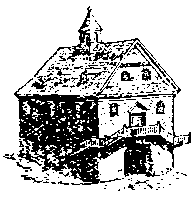 COLONIAL COURT-HOUSE.
PHILADELPHIA, 1707.
FROM THE PREFACE.
The present work is meant, in the first instance, for the young—not alone for boys and girls, but for young men and women who have yet to make themselves familiar with the more important features of their country's history. By a book for the young is meant one in which the author studies to make his statements clear and explicit, in which curious and picturesque details are inserted, and in which the writer does not neglect such anecdotes as lend the charm of a human and personal interest to the broader facts of the nation's story. That history is often tiresome to the young is not so much the fault of history as of a false method of writing by which one contrives to relate events without sympathy or imagination, without narrative connection or animation. The attempt to master vague and general records of kiln-dried facts is certain to beget in the ordinary reader a repulsion from the study of history—one of the very most important of all studies for its widening influence on general culture.
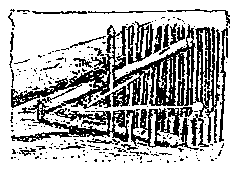 INDIAN'S TRAP.
"Fills a decided gap which has existed for the past twenty years in American historical literature. The work is admirably planned and executed, and will at once take its place as a standard record of the life, growth, and development of the nation. It is profusely and beautifully illustrated."—Boston Transcript.
 GENERAL PUTNAM.
"The book in its new dress makes a much finer appearance than before, and will be welcomed by older readers as gladly as its predecessor was greeted by girls and boys. The lavish use the publishers have made of colored plates, woodcuts, and photographic reproductions, gives an unwonted piquancy to the printed page, catching the eye as surely as the text engages the mind."—New York Critic.
"The author writes history as a story. It can never be less than that. The book will enlist the interest of young people, enlighten their understanding, and by the glow of its statements fix the great events of the country firmly in the mind."—San Francisco Bulletin.
TOURMALIN'S TIME CHEQUES. By F. Anstey, author of "Vice Versa," "The Giant's Robe," etc.
"Mr. Anstey has done nothing more original or fantastic with more success."—The Nation.
"A curious conceit and very entertaining story."—Boston Advertiser.
"Each cheque is good for several laughs."—New York Herald.
"Nothing could be more sprightly and amusingly whimsical."—Boston Courier.
"A very clever tale of fantastic humor.... The literary style is graceful and sparkling."—Chicago Times.
"Certainly one of the most diverting books of the season."—Brooklyn Times.
"Exquisitely printed and bound."—Philadelphia Times.
FROM SHADOW TO SUNLIGHT. By the Marquis of Lorne.
"In these days of princely criticism—that is to say, criticism of princes—it is refreshing to meet a really good bit of aristocratic literary work, albeit the author is only a prince-in-law.... The theme chosen by the Marquis makes his story attractive to Americans."—Chicago Tribune.
"A charming book."—Cincinnati Enquirer.
ADOPTING AN ABANDONED FARM. By Kate Sanborn.
"A sunny, pungent, humorous sketch."—Chicago Times.
"A laughable picture of the grievous experiences of a young woman who sought to demonstrate the idea that a woman can farm.... The drakes refused to lay; the vegetables refused to come up; and the taxes would not go down."—Minneapolis Tribune.
"The book is dainty in exterior as well as rich within; and to those who seek health, moral and physical, we say, 'Buy it.'"—Montreal Gazette.
"If any one wants an hour's entertainment for a warm sunny day on the piazza, or a cold wet day by the log-fire, this is the book that will furnish it."—New York Observer.
"Many is the good laugh the reader will have over its pages."—Philadelphia Ledger.
ON THE LAKE OF LUCERNE, and other Stories. By Beatrice Whitby, author of "A Matter of Skill," "The Awakening of Mary Fenwick," etc.
"Six short stories carefully and conscientiously finished, and told with the graceful ease of the practiced raconteur."—Literary Digest.
"The stories are pleasantly told in light and delicate vein, and are sure to be acceptable to the friends Miss Whitby has already made on this side of the Atlantic."—Philadelphia Bulletin.
"Very dainty, not only in mechanical workmanship but in matter and manner."—Boston Advertiser.
Each, 16mo, half cloth, with specially designed cover, 50 cents.
New York: D. APPLETON & CO., 1, 3, & 5 Bond Street.
Transcriber's Notes:
The original hyphenation was preserved even when inconsistent, obvious typos have been fixed.